
In the ever-changing world of logistics in Southern Africa, transportation costs play a significant role and remain a constant source of pressure for both companies that manufacture goods and transport companies that distribute these goods to the market. These costs impact supply chains, affect profit margins, and ultimately influence the competitiveness of the entire economy. It is essential for any business that wants to succeed in this environment to understand how transport costs are determined and how to navigate their complexities.
A Quest for Value in a Costly Maze
South African companies across all industries are always on the lookout for efficient transportation solutions, but it is a constant struggle. Inflation has a significant impact, fuel prices are continuously on the rise, and the ongoing challenges of crime and a lack of investment in key infrastructure puts immense pressure on manufacturers to get the most value out of every Rand spent on transportation.
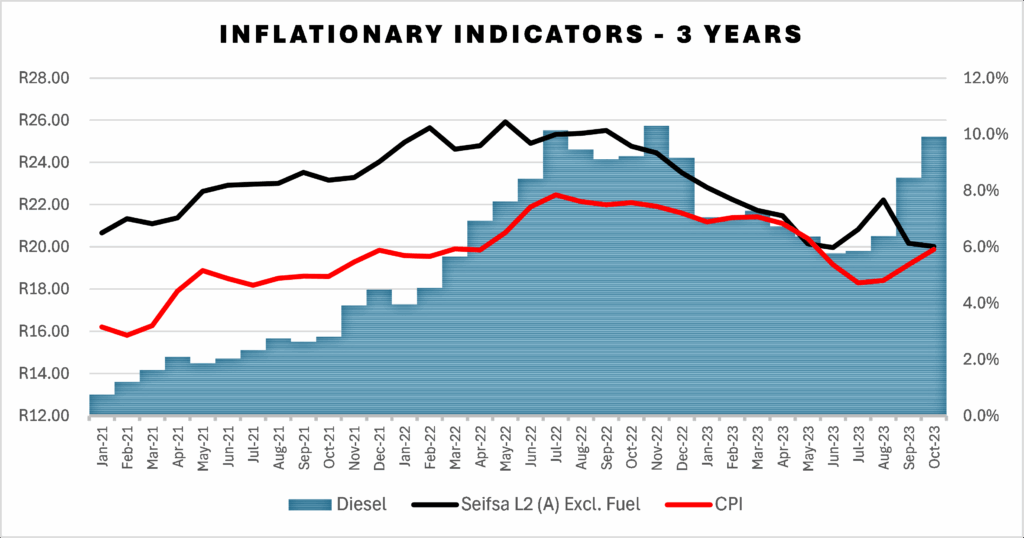
A clear correlation between the diesel price, CPI and SEIFSA indices is evident in the graphic above. While most companies apply the Consumer Price Index as the non-fuel inflationary metric when negotiating transportation contracts, the SEIFSA L2 index better represents the actual transport cost basket. The SEIFSA L2 index comprises labour, tyres and tubes, spares/stores, amortisation and indirect costs – the real-world costs that transporters deal with daily. The more applicable SEIFSA L2 index has averaged 2.4% higher than CPI over the previous three years, impacting the profitability of transport companies that have to absorb this differential in real transport cost increases.
For South African transport companies, the rising cost of labour, procuring new and replacement fleet, fuel, tyres and vehicle maintenance eats into already tight margins. The impact of crime on their operations is ever-present, with hijackings, looting and cargo theft adding a layer of uncertainty and cost resulting in significant increases in insurance premiums.
According to the South African Road Freight Association Vehicle Cost Index (VCI)[1], a prime mover (truck tractor) and semi-trailer cost increased from R 2.60m in 2021 to R 3.55m in 2023. This means that in only three years, the cost of purchasing a new/replacement vehicle combination has increased by 36%, whilst the cost of capital has increased by a staggering 137%. Two other large expense items, tyres and maintenance, have increased by 56% and 51% over the same three-year period.
Another significant challenge that Transport Companies face is the cost of diesel. Many Transport Companies that operate on C.O.D. at best have secured 14 or 30-day terms with fuel suppliers whilst the trend from Manufacturers is to extend payment terms from 30 to 60 days. Some global corporations only offer 120-day payment terms, which makes managing cash flow a nightmare for transport owners.
The specific cost items that comprise owning and operating a truck tractor and trailer combination are illustrated below (note that the increase in cost of capital in 2022 is largely due to increases in the asset price and higher interest rates):
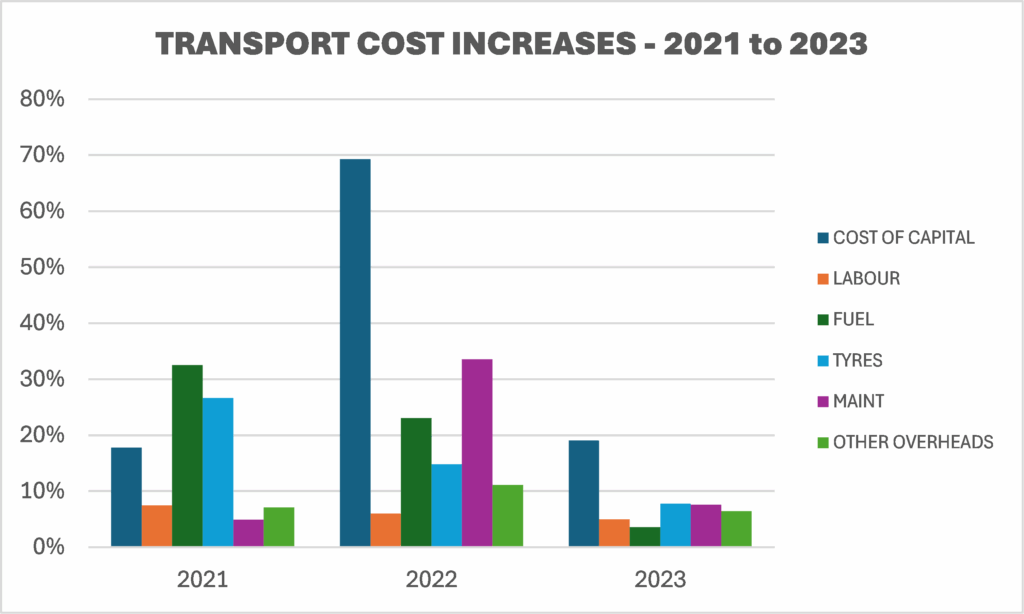
Figure 1: RFA Vehicle Cost Index Concept 18 Dec 2023
Rates Benchmarking: A Beacon in the Murky Waters
Rates benchmarking is a valuable tool for both companies and their transport service providers to gain better insights into the murky waters of transport costs. By comparing transport rates to market averages, both parties can identify potential issues and negotiate more effectively.
Transport rates benchmarking involves analysing actual transport rates against market averages for similar shipments – a like for like comparison is essential here. This process requires collecting data on relevant shipments, including origin, destination, cargo type, volume, lead times, and any special requirements. Then, benchmarking platforms, industry reports, or specialised logistics consultancies can be used to access market data for comparable routes and scenarios.
It is essential to consider several crucial factors while comparing actual rates to benchmark rates. Are the shipments exactly alike? Do they both involve the same type of transport and lead time? How does the compared regions’ fuel prices, infrastructure conditions, and regulatory environments differ? These nuances must be factored in to ensure a balanced and meaningful comparison.
Interpreting the results goes beyond identifying deviations from the benchmark. It is necessary to consider the reasons behind any discrepancies. Are higher rates justified by exceptional service, specialised equipment, or faster delivery times? Conversely, always bear in mind that the lowest market rates might carry hidden costs or potential risks that are not immediately apparent.
Ultimately, rates benchmarking is a powerful tool for understanding your position in the market, negotiating with your transport service providers or customer, and optimising your transport costs. By meticulously analysing the data and factoring in the broader context, you can confidently navigate the complex world of transport pricing and make informed decisions that drive cost-efficiency and business success.
Beyond Rates: A Holistic Approach to Cost Reduction
However, rate benchmarking is just one piece of the puzzle. A holistic approach to cost reduction requires a collaborative effort from both Manufacturers and Transporters.
Manufacturers can optimise their processes by:
- Centralising transportation management
Defining a robust Transport strategy that compliments the overall business strategy, consolidating volume with fewer providers can lead to better rates and improved efficiency.
- Adopting leading technology solutions
Utilising platforms for load allocation, route optimisation and real-time tracking can streamline operations and reduce costs.
- Collaborating with Transporters
Building strong relationships, open communication, and transparent reporting can lead to mutually beneficial solutions.
- Improving supply chain efficiencies
Removing non-value-adding processes to eliminate waste and improve vehicle turnaround times at loading and offloading points.
Transporters, in turn, can:
- Invest in efficient equipment
Newer trucks with fuel-efficient technologies and proper maintenance can significantly reduce fuel costs.
- Diversify revenue streams
Exploring specialised services like refrigerated transport or door-to-door delivery can offer new growth opportunities.
- Embrace technology
Adopting telematics, integrated mobile applications and route planning tools can improve efficiency and reduce risk.
Embracing the Digital Age: How Technology Empowers Cost-Efficient Transport in South Africa
In the realm of South African logistics, where every Rand counts, technology emerges as a potent weapon in the battle against soaring transport costs. Embracing digital solutions isn’t just a fad; it’s a strategic imperative for both Manufacturers and Transporters seeking to optimise operations, trim expenses, and stay ahead of the curve.
Manufacturers: Harnessing the Power of Transport Management Systems (TMS)
For South African Manufacturers, a robust TMS becomes an indispensable companion. A TMS unlocks a treasure trove of cost-saving features, from streamlined procurement and route optimisation to real-time shipment tracking and automated invoice reconciliation.
Centralised Visibility: No more juggling spreadsheets, WhatsApp groups and phone calls. A TMS provides a single platform for managing all transportation needs, offering holistic visibility into routes, costs, and performance. This empowers companies to identify inefficiencies, negotiate better rates, and optimise transportation budgets.
Route Optimization: Gone are the days of inefficient, meandering routes. Advanced algorithms in TMS software suggest the most cost-effective and time-efficient paths, considering factors like traffic patterns, fuel consumption, and driver compliance. This translates to reduced fuel costs, faster delivery times, and happier customers.
Real-Time Visibility: Companies no longer need to hold their breath, anxiously awaiting updates on their cargo. Real-time tracking offered by TMS solutions reveals the exact location of shipments, providing peace of mind and enabling proactive interventions in case of delays or unforeseen events.
Transporters: Mobile Apps Fuelling Operational Efficiency
For South African Transporters, mobile apps have become more than just convenient tools; they are catalysts for operational efficiency and cost reduction.
Driver Management: Apps can streamline driver communication, dispatch assignments, and track hours of service, ensuring compliance and optimising driver resource allocation. This promotes driver satisfaction, minimises overtime costs, and enhances overall efficiency.
Paperless Workflows: Ditch the mountains of paperwork! Mobile apps enable digital document capture, invoice processing, and expense management, eliminating manual effort and reducing administrative costs. This translates to faster turnaround times, improved accuracy, and happier drivers.
Predictive Maintenance: Proactive maintenance is key to avoiding costly breakdowns and delays. Mobile apps with AI-powered features can monitor vehicle health, predict potential issues, and schedule preventive maintenance, minimising downtime and maximising vehicle uptime.
Real-Time Execution Management Tools: A Shared Vision for Success
For both Manufacturers and Transporters, real-time execution management tools act as a bridge, fostering seamless collaboration and cost-effective execution.
Shared Visibility: A single platform allows both parties to see the same real-time data on shipments, enabling proactive problem-solving and efficient communication. This promotes trust, builds strong partnerships, and eliminates finger-pointing in case of delays or issues.
Exception Management: Unexpected events are inevitable. Real-time software solutions provide instant alerts for deviations from planned routes, delays, or potential security threats. This allows both parties to react quickly, minimise disruptions, and mitigate potential losses.
Continuous Improvement: Data is the lifeblood of improvement. These tools capture valuable data on routes, performance, and costs, providing insights for both Manufacturers and Transporters to continuously optimise their operations and identify areas for further cost reduction.
The Road Ahead: Embracing Technology for a Collaborative Future
By embracing technology and putting the right business processes in place, Manufacturers and Transporters can transform the South African logistics landscape from a minefield of inefficiencies into a highway of cost-effective excellence. Collaboration, data-driven decisions, and shared commitment to digital solutions are the cornerstones of future success.
The future belongs to those companies that embrace innovation and agility. In the face of rising costs and a dynamic economic landscape, South African logistics can only thrive by harnessing the power of technology, one TMS platform, one mobile app, and one real-time data point at a time. Let’s pave the way for a future where transport costs are not roadblocks but catalysts for growth, spurred by the shared vision of a lean, efficient, and globally competitive South African logistics ecosystem.
The South African Context: A Call for Collective Action
The unique challenges of the South African landscape demand a collective approach to tackling transport costs. Government intervention in infrastructure development, crime reduction, and fuel price regulation can provide a much-needed boost.
Manufacturers and Transporters can collaborate to advocate for these changes, while fostering a culture of open communication and transparency within the industry. By working together, the industry can create a more efficient and cost-effective transport ecosystem that benefits all stakeholders and drives South Africa’s economic growth.
In conclusion, navigating the maze of transport costs in South Africa requires a nuanced understanding of the challenges faced by both Manufacturers and Transporters. By embracing transparency, leveraging technology, and fostering collaboration, we can unlock cost-saving opportunities and build a more resilient and competitive logistics sector. Only then can we truly harness the power of efficient transport to drive South Africa’s economic engine forward.
[1] *The Road Freight Association Vehicle Cost Index – All Concepts https://rfa.co.za/SA/vehicle-cost-index-_-all-concepts/ (Accessed 5 Feb 2023)